.png)

Hello first time renters and welcome to a world of inspection times, condition reports, bond lodgements and deciding what needs to be sacrificed on your non-negotiable list for the perfect rental. You might be moving out of home, relocating to Melbourne or renting in your own name for the first time, but whatever brought you here, the process can feel competitive and confusing which is why a detailed guide comes in handy.
The good news is that it becomes much more manageable once you know the order of events and what to prepare. As a team that manages rental homes and supports residents every day, Local has put together the practical things worth knowing, from setting a budget and choosing a neighbourhood to understanding your agreement and protecting your bond.
The honest answer is that it depends on the location, size and quality of the home. A compact apartment in the CBD, an older unit in trendy Fitzroy and a house in the leafy southside sit in very different markets. Bedroom count matters, but so do the property’s age, size, condition, exact street, parking, transport links and amenities.
For a general overview, the Victorian Government rental data put metropolitan Melbourne’s median weekly rent across property types at $580 in the September 2025 quarter. More recently, PropTrack data published by realestate.com.au reported a combined Melbourne median rent of $600 per week by mid-2026.
Bedroom-level figures become more useful when the geography is specific. Realestate.com.au’s Melbourne CBD suburb profile, covering September 2025 to August 2026, recorded median unit rents of $560 a week for a one-bedroom property, $740 for two bedrooms and $1,100 for three bedrooms.
Move into an inner neighbourhood and the picture changes. Over the same period, Kensington’s broader unit market recorded median weekly rents of $470 for one bedroom, $560 for two bedrooms and $893 for three bedrooms. Further from the city, renters can often find lower prices or more space for the same money, although transport costs and a longer commute may eat into the saving. Outer-suburban houses and newly built apartments are also different products, so compare similar homes rather than assuming every extra kilometre guarantees a bargain.
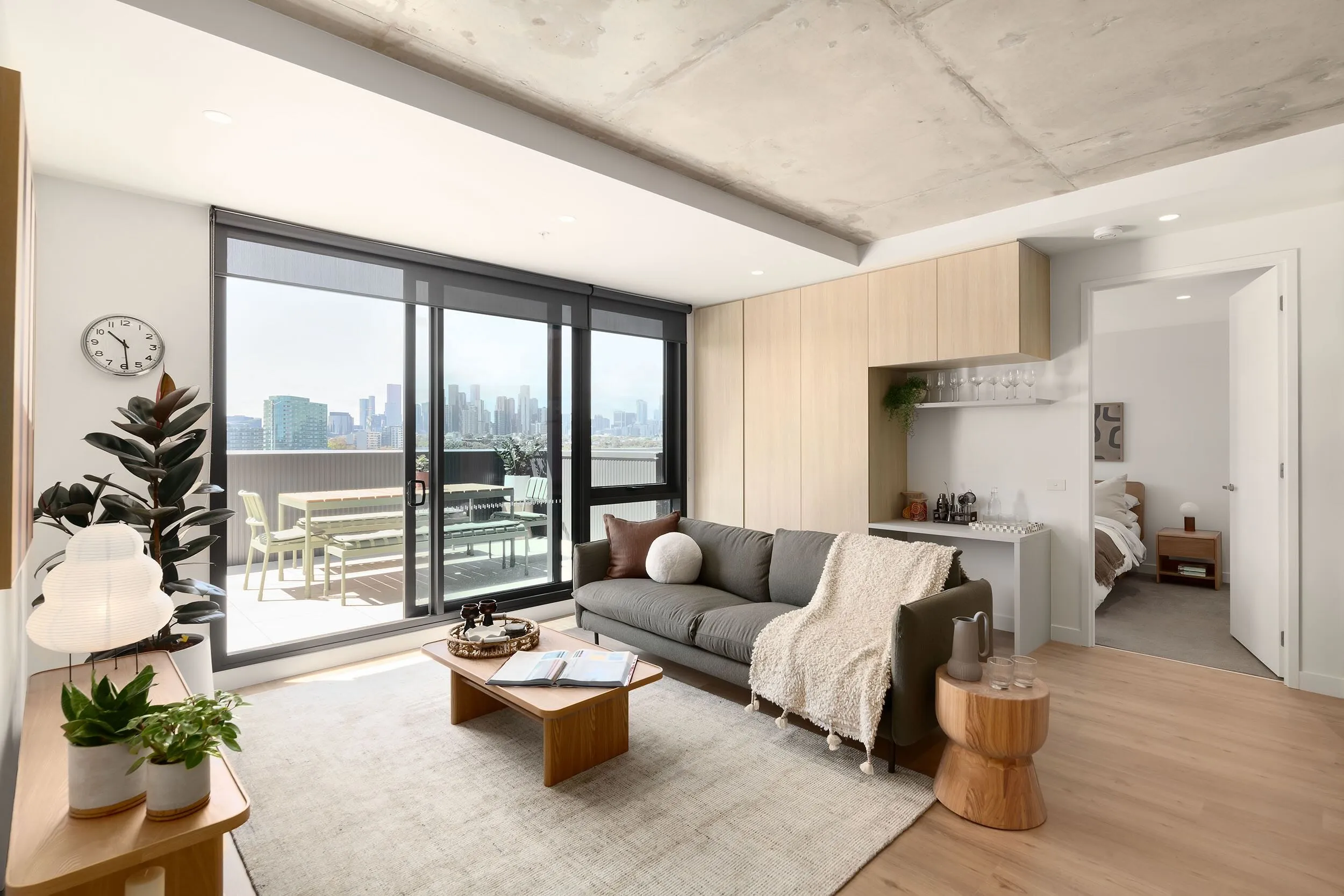
Local: Residential’s apartments should be considered separately from these market medians. They are newly built rental homes with whitegoods, onsite support and top shared amenities included, so their pricing is not representative of the typical Melbourne rental. Check Local’s current Melbourne apartments for live availability and advertised rates, then compare the complete offer with similar homes nearby.
Rental prices can change quickly, so date your shortlist and save the listings you use for comparison.
In short, yes, Melbourne's rental market can be competitive, particularly for well-located homes at accessible price points. Popular inspections may be busy and a good listing can attract applications quickly. That does not mean you must panic-apply for a windowless shoebox, but it does mean preparation is key.
The usual process starts online so set alerts for your preferred suburbs, price range and property type. When a suitable home appears, read the full listing, check the available date and book an inspection. Some providers offer virtual tours, but seeing the home and immediate area in person is valuable whenever possible.
At the inspection, introduce yourself to the property manager or onsite team, look past styling and take useful notes. If you want the property, submit the application promptly using the requested form. Applications commonly ask for proof of identity, income or ability to pay, employment details, and rental history or references where applicable. As a first-time renter, you may not have a previous rental reference which is okay! Be honest and provide the other requested documents and a personal referee rather than calling in a favour from a friend who has to pretend to be a previous landlord with a glowing review of your tenancy.
If your application is approved, you will receive a rental agreement to review and sign. You will then arrange the required bond and rent in advance through the approved process, receive the keys and complete the condition report.
Keep your documents ready in a secure folder so a short application window does not catch you out. Make sure names and contact details are consistent, alert references that they may be contacted and never send sensitive identity documents through an unverified link. Under Victoria's current rules, rental providers and agents must use standardised application processes and are limited in the information they can request.
Twelve-month fixed terms remain common, but they are not the only option with month-to-month also preferred by some landlords, or three to six months. Renting with Local currently includes lease options of up to five years, subject to the home and terms offered. A longer option can suit someone who wants to settle, while a shorter agreement may suit a renter expecting work, study or household changes.
A commonly used budgeting benchmark is to keep rent around 30% of gross income. On that measure, somebody earning $1,000 per week before tax would allocate about $300 to weekly rent. It is a starting point, not a pass-or-fail rule.
Gross income is not the money that lands in your account. Your workable number depends on take-home pay, debt repayments, medical costs, dependants, savings goals and the rest of your actual life. A person with low transport costs and no debt may manage a different rent from somebody with the same salary who pays for a car, study and regular travel.
Start with monthly take-home income and subtract non-negotiable costs. Include groceries, phone, subscriptions, transport, debt, healthcare and a realistic savings buffer. Then add the housing costs that sit outside the advertised rent: electricity or gas, water usage where charged, internet, contents insurance, parking, storage and moving expenses.
Upfront costs deserve their own line. Depending on the home, you may need bond, rent in advance, removalists or van hire, utility connection costs and basic household items.
When comparing a newer amenity-rich building with a conventional rental, count only inclusions you will genuinely use. An onsite gym could replace a membership. A coworking space could replace paid hot-desking. Supplied whitegoods avoid purchase and moving costs. Local's What you save living like a Local article illustrates this total-cost approach, but your personal saving will depend on what you would otherwise buy.
If the weekly rent leaves no margin for a higher bill, a dental appointment or an unexpected trip, the budget is too tight even if it meets a neat percentage rule.
.jpg)
Rent is important, but a cheaper home can become expensive in time and transport. Start with the trips you make most: work, university, family, childcare or regular appointments. Use a journey planner at the hours you would actually travel and check the full door-to-door time, including the walk, interchange and wait. ‘Near a station’ can cover an impressive amount of geography in a listing.
Look at frequency as well as distance. A train every few minutes at peak hour offers a different experience from a bus that ends early. If you drive, investigate traffic, parking availability and whether a parking space is included or separately rented. Cyclists should check the route rather than relying on a hopeful straight line on a map.
Then think about everyday life. Can you walk to a supermarket? Is there a park, gym, library or cafe you would use? How late do nearby shops stay open? Does the area feel comfortable when you return after dark? Visit on a weekday morning, in the evening and on a weekend if you can. A peaceful Saturday inspection will not reveal Monday traffic or Friday-night noise.
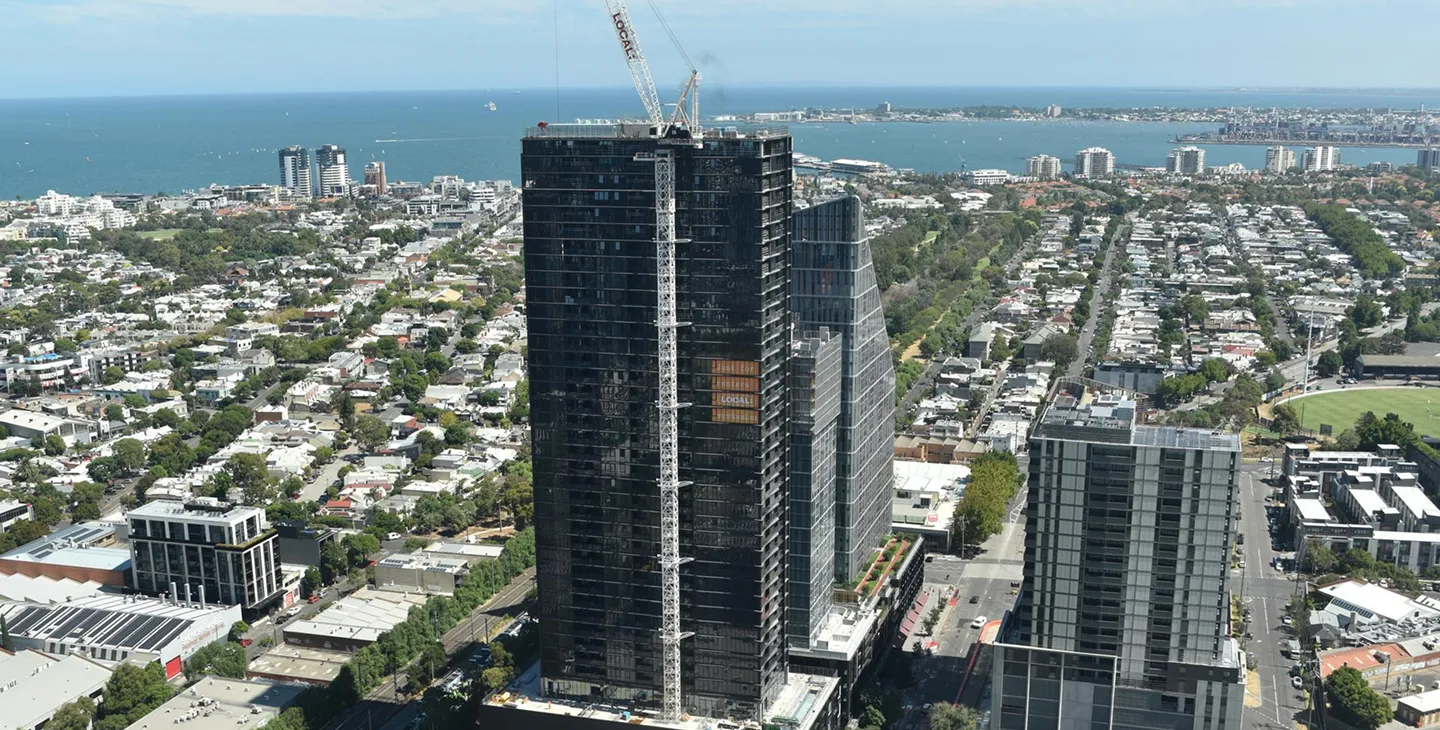
Kensington is an inner-city option with two nearby train lines, local cafes and parks, and quick access to the CBD. Local: Kensington sits close to Macaulay and Kensington stations, making it useful for renters who prioritise a short city connection.
Local: Box Hill offers a different equation: a major transport and shopping hub, substantial dining choices, healthcare and education in Melbourne's east. South Melbourne places renters closer to the CBD, market, parks and the bay, with tram access and many daily needs nearby.
The right neighbourhood is the one whose ordinary routines line up with yours. Look at current local crime information if safety is a concern, but avoid reducing a suburb to a single ranking. Check the immediate streets, lighting, building access and your own comfort at the times you will be coming and going. Ask current residents or the onsite team what daily life is like. You can read first-hand accounts from Local residents on the News and Announcements page of Local’s website.
An inspection is not only your chance to impress the leasing team, but it’s your chance to test whether the home works for you.
Start with natural light, for example, which direction do the main windows face? Can windows open safely, and is there practical ventilation in the bathroom and kitchen? Look closely around ceilings, window frames, cupboards and wet areas for staining, damp, mould or signs of water damage.
Turn on taps where permitted and check water pressure and drainage. Look at the condition of the oven, cooktop, dishwasher, heating, cooling and any supplied fridge, washer or dryer. Ask what is included rather than assuming the beautiful bar stools belong to your future.
Open wardrobes and cupboards. Measure spaces that matter, especially the fridge cavity, bedroom, study nook and parking bay. Listen for road, train, lift, hallway and neighbouring noise. Mobile reception can disappear in surprising corners, so check your phone and confirm the available internet connection – this is more important than you may think!
In an apartment building, inspect more than the apartment. How do residents and visitors enter? Is parcel delivery secure? Where are bikes, bins and moving vehicles handled? Walk through any gym, pool, coworking or entertaining spaces and ask whether access is included, booked or charged separately.
Before leaving, confirm the bond, available date, lease lengths, pet arrangements and what the rent includes. Ask how maintenance is requested, who handles urgent issues after hours and whether any building or amenity fees apply. Local has onsite resident and maintenance support; elsewhere, you may deal with an owner or external agent. Neither answer is automatically wrong, but you should know the process before the sink chooses Sunday night to misbehave.
Take notes and photos without capturing other applicants or residents.
Your rental agreement is the contract between you and the rental provider. It sets out the property, rent, payment arrangements, start and end dates, bond and other conditions. It may also cover pets, services, maintenance contacts and building requirements. Read every page before signing and ask about anything you do not understand.
Do not assume a conversation at the inspection changes the written agreement. If an agreed detail matters such as a pet, parking space, supplied appliance or move-in date, make sure it’s correctly recorded. Legal requirements apply regardless of what a contract says, while optional terms depend on what the parties actually agree.
The bond is money held as security during the tenancy. It may be claimed at the end for matters such as unpaid rent or damage beyond fair wear and tear, subject to the proper process. In Victoria, rental bonds are lodged with the Residential Tenancies Bond Authority, not kept in an agent's everyday account. Follow the official lodgement process and keep the confirmation.
Bond limits can depend on the weekly rent and circumstances, so check current Consumer Affairs Victoria guidance rather than relying on a friend's lease from years ago. You may also be eligible for Victoria's portable bond arrangements or RentAssist Bond Loan support. Local's current lease and bond information is available through its renting guide.
Twelve months is common, but agreements can be shorter, longer or periodic. A fixed term gives both parties agreed dates, while a periodic agreement continues month to month. Each has rules for rent increases, notices and ending the tenancy.
Before arranging the furniture, complete the condition report carefully. Compare every room with the supplied report, add anything missing and photograph existing marks, chips, stains and damage. Keep clear, dated copies. Victorian renters generally have five business days from moving in to return their completed condition report, so do not leave it under a stack of flattened boxes.
Set up electricity, gas where relevant, water and internet, and consider contents insurance. Update your address and save the maintenance and emergency contacts.
Learn how the building works: access systems, visitor entry, parcel collection, waste and recycling, bike storage, amenity bookings and moving rules. Test keys and fobs early. If something is not working or does not match the condition report, report it promptly in writing.
Finally, say hello to the people nearby. You do not need to deliver muffins to the whole floor, but knowing a neighbour makes a new building feel less anonymous. Resident events can help. Local's Rent Party, for example, brings residents together over food, music and activities; smaller building events can be an easier way to meet people without initiating an awkward lift friendship from scratch.
The most common budgeting mistake is allowing for rent and little else. Utilities, internet, transport, parking, moving and household basics can turn an affordable-looking number into a weekly squeeze.
Another is choosing a suburb on price alone. Test the commute, visit at different times and look at the services you will actually use. A home should work on a dark Tuesday evening, not only during a sunny ten-minute inspection.
Do not wait until you find the perfect listing to assemble application documents. Keep accurate identification, income information and references ready, then submit only through a verified channel. Read the agreement instead of racing to sign it, and clarify every inclusion or additional fee.
Most importantly, do not rush the condition report. Record existing damage, take dated photographs and retain copies of your lease, bond lodgement, report and correspondence. Future you should not have to prove a mysterious wall mark existed using one blurry moving-day selfie.
And ask how maintenance works. Knowing who to contact, how to lodge a request and where to find the urgent-repair number is much easier before anything breaks.
Your first rental does not have to be your forever home, but it does need to fit your budget, support your daily travel and feel comfortable enough to live your real life in. Use this guide to compare costs, neighbourhoods, agreements and services consistently, rather than being won over by one excellent balcony. A little preparation now can save time, money and several deeply unhelpful conversations once the boxes are waiting at the door.
When you’re ready to look, explore Local Residential's current Melbourne apartments and compare the available homes, locations, lease options and inclusions.








.png)